It includes a major section on an archetype Case Study which analyzes a range of potential solutions for the refurbishment of a care home in the UK. Carbon-Cost Analysis (CCA) studies are used to decipher the optimal solution based on the customers’ criteria of reducing carbon dioxide (CO2) emissions by 20%, opting for a system with no more than two heat pumps (HPs) due to space constraints, as well as considering the operating expenditure (OPEX) as a key metric when deciding on the final solution. The archetypal site was given a current system of 3 x non-condensing water heaters.
The whitepaper is strident in pointing out that Value Engineering (VE) principles highlight the importance of putting customer requirements first, applying cost effective engineering solutions and improving the whole life value of a project – as opposed to simply cutting costs resulting in the inevitable compromise of performance.
 It includes a major section on an archetype Case Study which analyzes a range of potential solutions for the refurbishment of a care home in the UK. Carbon-Cost Analysis (CCA) studies are used to decipher the optimal solution based on the customers’ criteria of reducing carbon dioxide (CO2) emissions by 20%, opting for a system with no more than two heat pumps (HPs) due to space constraints, as well as considering the operating expenditure (OPEX) as a key metric when deciding on the final solution. The archetypal site was given a current system of 3 x non-condensing water heaters.
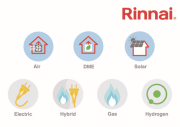 After generating several proposed solutions and evaluating these based on the set criteria, there is further analysis of specific ones – an instantaneous gas-fired system, a hybrid system and an all-electric system – all based on the initial capital expenditure (CAPEX), plus 5-year forecasts regarding OPEX, carbon production, and lifecycle costs. A full breakdown of CAPEX, OPEX and carbon performance of all relevant systems is provided to demonstrate which one provides the optimal solution in accordance with the customer’s requirements.
The detailed analysis showed that the highest whole life value system that best aligned with the customers’ needs is the hybrid system.
Rinnai’s latest whitepaper is designed to inform building services consultants, main contractors, architects, specifiers and system designers on the wide range of technologies that can synergize together to create a long life efficient and cost-effective commercial DHW system.
The full version is available now on the Rinnai website https://www.rinnai-uk.co.uk/contact-us/ask-us-question